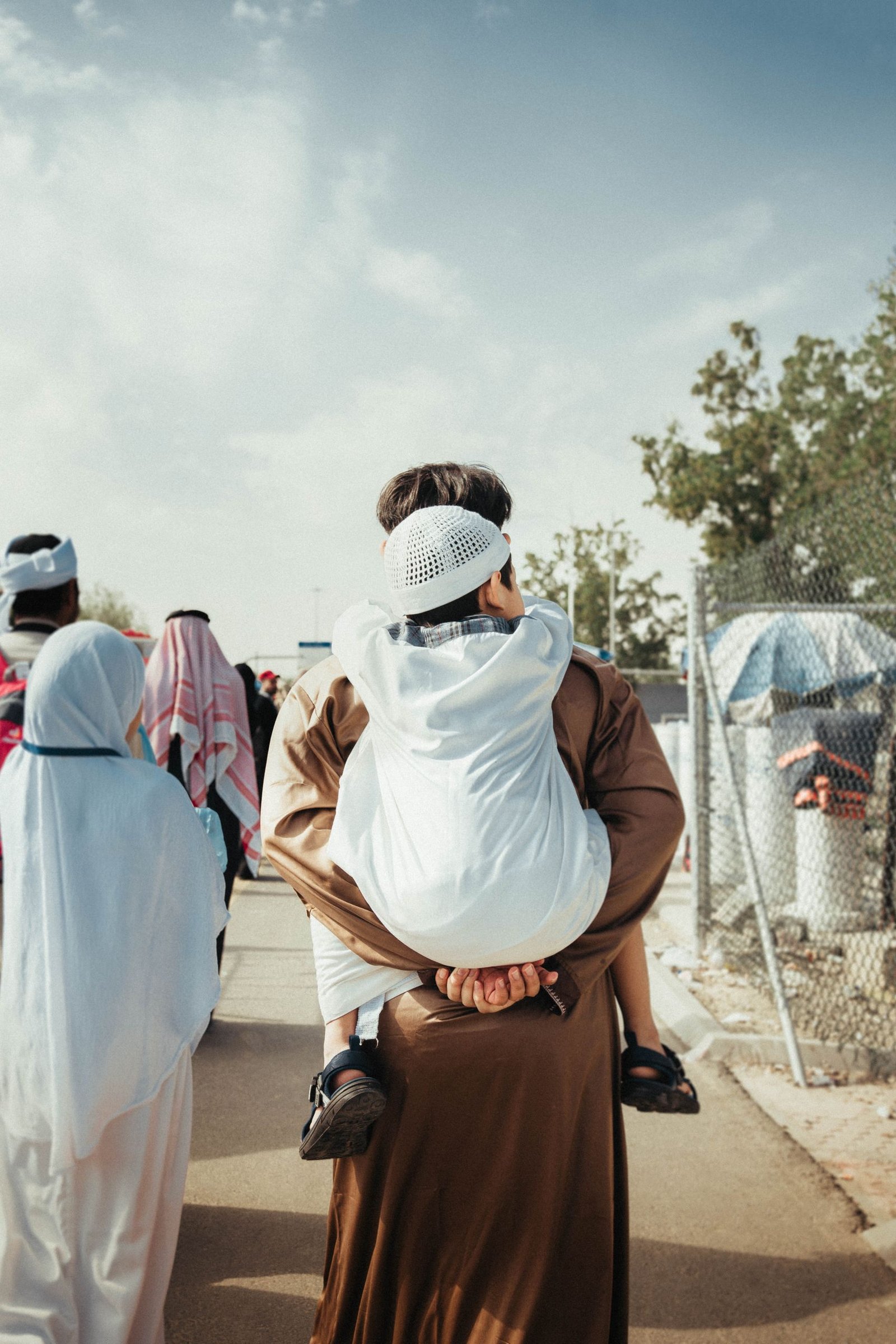
A Generation Gap
I read a quote years ago that immediately stuck with me, and I’ve been trying – unsuccessfully – to find its again ever since. I can’t remember the exact wording, but it went something like this:
A successful society needs mixing of the ages and segregation of the genders.
Today, ironically, we see the opposite. The old mix with the old, the young with the young, and there is a huge gap between them. Meanwhile, society no longer has any barrier or boundary between male and female.
A few years ago, I watched a fascinating television series called Old People’s Home for 4 Year Olds. The idea was simple: a group of preschool children were brought into an aged-care environment and regularly spent time with elderly residents as part of an intergenerational experiment. What struck me was how much both groups seemed to gain from something as simple as spending time together. The older participants showed improvements in areas such as physical function, mood, social connection, and sense of purpose, while the children developed their communication and social skills and became more comfortable interacting with older people.
There was nothing particularly revolutionary about the intervention. They simply brought together two generations that modern society has increasingly separated. The elderly had energy and companionship brought into their lives, while the children gained access to a generation carrying decades of experience, patience and perspective. It made me wonder how much we lose when every age group lives almost entirely within its own world.
Imagine instead a community where young and old mixed naturally. Young people would constantly benefit from the knowledge, wisdom and experience of those who came before them, while older people would benefit from the energy, optimism and fresh perspective of youth. The young would have people to learn from, and the old would constantly be reminded that they have something they need to pass on.
When we look at the community built by our greatest role model, Rasulallah ﷺ, this is exactly what we find. There was no separate world of “the youth” existing somewhere on the fringes of the community. The Prophet ﷺ established relationships with young people from the very beginning of their lives. He welcomed them at birth, knew them throughout childhood, joked with them, showed affection to them, taught them and listened to them. As they grew older, he advised them, sought their opinions with his most personal affairs, and eventually trusted them with some of the most serious responsibilities of the Ummah.
They belonged.
A Relationship From the Beginning
We all remember the emotion in the moments right after our children are born. Amid all the chaos, happiness, tears and hugs, one of the first things we do is take photos and message our closest family and friends. We want the people we loved to know that this new little person had arrived.
More than fourteen centuries ago in Madinah, the Sahabah also brought their newborn children to someone they loved: Rasulallah ﷺ.
Anas bin Malik (RA) describes the night his mother Umm Sulaim gave birth to his younger brother. She did not want to do tahneek – the sunnah practice of chewing on a date then rubbing the chewed date onto the palate of the newborn – except after the Messenger ﷺ had done so first. Early in the morning, she had Anas grab some ajwah dates, carry her newborn, and take him to the Messenger ﷺ. The Prophet ﷺ performed tahneek for the child immediately. Aisha (RA) reported that newborn infants used to be brought to the Messenger ﷺ frequently, and he would bless them and perform tahneek. The Sahabah carried on this tradition – Umar RA did tahneek for many children in Madinah, including the famous tabi’ee and scholar, Al-Hasan Al-Basri.
This might sound simple, but there is a bond formed for these children with Muhammad ﷺ – the Messenger of Allah, the leader of Madinah – right from their birth. Not only do they receive barakah, but these children would surely grow up knowing that their very first sustenance was dates mixed with the blessed saliva of the Beloved ﷺ. This breaks barriers between them immediately.
Not only would the Messenger ﷺ perform tahneek, but he also often named children. When Ali (RA) named his son Harb (literally, “war”), the Prophet ﷺ changed it to a more pleasant name – Al-Hasan (“goodness”). He did the same with Al-Husayn. In other instances, he advised Sahabah to name their children Hamzah, or Abdul-Rahman, or Abdullah.
I remember as a child feeling like my head was in the clouds when a local sports player remembered my name as he walked past me. Imagine your name being chosen by Rasulallah ﷺ?
He Knew Their World
The Messenger of Allah ﷺ took a genuine interest in the children around him.
When he would meet a child, he would caress his head, hug and kiss him. His face was especially kind and merry towards children. He used to give them salaam, and ask about them. He would talk to them, joke and play with them. If he was mounted on a horse, he would seat them on the pillion, and take them to their destinations.
Once, he ﷺ saw some children racing, and he ran with them. Abdullah bin Umar RA recalled that the Messenger ﷺ would sit with the youth after Fajr, asking them to narrate their dreams to him. Ibn Umar would make dua that he could have a good dream that he could narrate to the Messenger ﷺ.
One of my favourite examples is of the younger brother of Anas bin Malik, Zayd, who owned a little bird. The Prophet ﷺ nicknamed Zayd “Abu Umayr”, and when he saw him, would playfully rhyme “Oh Abu Umayr, what’s happening with the nughayr?” Not only did he have a nickname for the child, but he remembered a personal detail about his life – the pet he had – and would make him feel welcome by enquiring about it! When the bird eventually died, the Prophet ﷺ was the one who consoled the young boy!
It is such a simple interaction, but think about who was speaking. This was the Messenger of Allah ﷺ: the leader of Madinah, receiving revelation, teaching an entire Ummah and carrying enormous responsibilities, yet he knew about a little boy’s pet bird. He gave him a nickname and knew what mattered to him. When he saw the boy, he entered his world rather than expecting the child to somehow enter the world of adults.
There is something profound here about how relationships with young people are built. We sometimes imagine tarbiyah as a series of important lectures and deep conversations about Islam, but often it begins with simply taking an interest in what a child cares about. What game are they playing? What are they reading? Which football team do they support? Who are their friends? What happened at school today? The bird might mean absolutely nothing to you, but it means something to them – and therefore, if you want a relationship with them, it should matter to you too.
He Made Young People Feel That They Belonged
Anas RA also narrated that when the Prophet ﷺ passed by some young girls beating the daff and singing:
نَحْنُ جَوَارٍ مِنْ بَنِي النَّجَّارِ
يَا حَبَّذَا مُحَمَّدٌ مِنْ جَارِ
“We are young girls from Banu al-Najjar; how wonderful a neighbour is Muhammad!”
The Prophet ﷺ responded:
اللَّهُ يَعْلَمُ أَنِّي لَأُحِبُّكُنَّ
“Allah knows that I love you.”
Of course, the children of Madinah established this sort of relationship with the Messenger ﷺ as soon as he arrived in Madinah. It was they who greeted him first, playing their tambourines and singing, without yet knowing that they would be subjected to the best of blessings. They were running around, full of life, yelling “Muhammad has arrived! Muhammad is here!” The Messenger ﷺ approached them and asked “Do you love me?” The children responded “Yes, O Messenger of Allah, we love you so much!” As his face glittered, he ﷺ smiled and said to the children “Indeed, I love you too”.
Anas RA also narrated:
أَنَّ رَسُولَ اللَّهِ ﷺ مَرَّ عَلَى غِلْمَانٍ فَسَلَّمَ عَلَيْهِمْ
“The Messenger of Allah ﷺ passed by some children and greeted them with salam.”
Again, it seems like such a small act. But when we walk through the masjid and pass a group of ten-year-olds, how often do we initiate salam with them? Do we know their names, ask how they are going, or stop for a conversation? Do we smile at them, and rub their head as the Messenger ﷺ did? Or do we walk straight past them looking for the adults we actually came to see?
We see, in all of these examples, what a welcoming presence our Messenger ﷺ was. The children expressed their love for him, and he expressed his love back. Children and young people around the Prophet ﷺ did not experience him only as a distant authority who delivered sermons and issued instructions. He was someone who greeted them, joked with them, remembered things about them and openly told them that he loved them. He broke any barrier between him and the children in Madinah, encouraging them to speak to him and establish relationships with the Messenger ﷺ directly.
When You Build the Relationship, They Come to You
The relationships we build with children when things are easy determine whether they will come to us when things become difficult. If a young person grows up knowing that you see them, listen to them, take them seriously and care about their world, then when something goes wrong, you have already built the foundations for them to approach you.
There is a remarkable narration about a young sahabi who came to the Prophet ﷺ struggling with sexual desire. He did not approach him with an easy or comfortable question. He asked the Messenger ﷺ directly, “O Messenger of Allah, give me permission to commit zina.” The other companions immediately rebuked him, but the Prophet ﷺ said, “Bring him close.” He sat him down and reasoned with him: Would you accept this for your mother? Your daughter? Your sister? Your paternal aunt? Your maternal aunt? Each time the young man said no, the Prophet ﷺ explained that other people likewise would not accept it for their female relatives. He then placed his hand upon him and made du‘a:
اللَّهُمَّ اغْفِرْ ذَنْبَهُ، وَطَهِّرْ قَلْبَهُ، وَحَصِّنْ فَرْجَهُ
“O Allah, forgive his sin, purify his heart, and guard his chastity.”
A young man was struggling with probably the most embarrassing desire imaginable, yet he felt able to walk up to the Messenger of Allah ﷺ and actually talk about it. Even more striking is the contrast between the Sahabah’s initial reaction – “Mah! Mah!”, essentially rebuking him – and the Prophet’s ﷺ response: “Bring him close.” Imagine if the Messenger ﷺ did not welcome the youth? This young man may have been too embarrassed to open up about his desires, and instead ended up falling into major sin.
That is the kind of relationship we should want with our children and our youth. If your teenage son is struggling with pornography, do you want him hiding it from you for five years? If your daughter has serious questions about Islam, do you want her asking anonymous strangers online because she is terrified of your reaction? If your child has done something seriously wrong, who do you want them to call first?
Our children cannot benefit from our guidance on the problems they are too afraid to tell us about. The Prophet ﷺ created closeness long before the crisis came.
And Eventually, He Trusted Them
The relationship between the Prophet ﷺ and the young people around him went even further. He did not merely make them feel welcome or give them advice; as they matured, he respected their judgement and trusted them. The story below is one that I still struggle to comprehend.
During the infamous incident of al-ifk – the horrible slander against Aisha (RA) – the Messenger ﷺ was at a loss. He was hearing rumours all across town accusing his beloved wife of indecency, and he genuinely did not know whether the rumours were true or not. He needed advice from people close to him. Of course, Abu Bakr (RA) was out of the equation – although the Messenger’s ﷺ best friend, he was the father of Aisha (RA), and the topic was far too delicate to discuss with him directly – so the Messenger ﷺ sought counsel from friends that he could trust.
Who did he turn to? He brought two sahabah to have an urgent, personal chat.
The first was Ali bin Abi Talib. Ali (RA) was 30 years younger than the Messenger ﷺ. He was his younger cousin, but had actually been raised inside the house of the Messenger ﷺ like his own child, and was now his son-in-law.
The second was Usaamah bin Zayd bin Harithah (RA). Zayd bin Harithah had been an adopted son of the Messenger ﷺ – before the laws of adoption were revealed – and his son Usaamah was a young teenager at this time, essentially like a grandson to the Messenger ﷺ!
Yet despite these two young men being far junior to the Messenger ﷺ in age, despite being raised in and around his household like his own children, the Messenger ﷺ trusted them so much that he asked them for advice on his most intimately personal matters! Their youth did not make their judgement irrelevant.
There is a beautiful progression here. The young people who grew up around the Prophet ﷺ were first welcomed, noticed and loved. They were spoken to, listened to and advised. Then, as they matured, the relationship matured with them. They became confidants, advisers and people whose opinions mattered. They were not permanently frozen in the category of “the kids”.
That is one of the fruits of generations actually living together.
We Have Created Separate Worlds
When I think back to my own childhood, I remember how often friends and relatives would visit our home. Our parents would call us out of our rooms and make us sit with the guests. Sometimes we would sit there in the corner, bored out of our minds, while the adults spent what felt like hours talking about politics, family affairs and other things we neither understood nor cared about.
At the time, I certainly did not appreciate it. But looking back, something was happening in those rooms. We were listening to adults think. We were hearing how they discussed politics, religion, family problems and events happening around the world. We learnt how adults greeted guests, disagreed with one another, told stories and showed hospitality. Eventually, as we grew older, we began to understand the conversations. Then we began contributing to them ourselves.
Today, people visit each other far less in the first place, but even when we do, the generations are often completely separated. The adults sit together while the children and teenagers disappear into bedrooms, usually behind screens. Sometimes hours pass and the young people barely interact with the guests at all. We might be protecting them from the boredom we experienced as children, but perhaps we have also removed one of the ordinary ways that young people once learnt how to exist around adults.
This separation exists beyond our homes as well. Children go to children’s programs, teenagers go to youth nights, adults attend adult lectures, and older people socialise primarily with other older people. Even within the masjid, a child can grow up seeing the same adults every week for ten years without those adults ever learning their name. Then, when that child turns eighteen or twenty, we suddenly wonder why they are disconnected from the community, why they do not seek advice from older Muslims, or why they feel that the masjid has little place for them beyond a designated “youth event”, which they now feel are too childish for them.
Relationships do not suddenly appear when we need them. You cannot ignore a child for fifteen years and then expect to become their mentor at sixteen. You cannot know nothing about their interests, friends, fears or ambitions and then expect them to reveal their deepest struggles to you. And if young people spend their entire childhood segregated into a separate youth world, we should not be surprised when they grow up without meaningful relationships with the generation that came before them.
Rebuilding a Community Across Generations
There is a simple principle running through all of these examples from the life of the Prophet ﷺ: closeness comes before influence. Before the Prophet ﷺ advised young people, they knew him. Before they brought him their deepest problems, they had experienced his warmth. Before he entrusted them with responsibility, he had spent years building relationships with them.
That means one of the first steps in purposeful tarbiyah is simply to reduce the distance between generations. Parents obviously carry the greatest responsibility for their own children, but this cannot stop with parents. Our children need grandparents, uncles, aunties, family friends, teachers, imams, mentors and older members of the community who know them personally. A healthy community should contain dozens of positive adults who know a young person’s name, ask about their life, notice when something changes and care about who they become.
We also need to bring young people back into the ordinary life of adults. Let them sit with the guests, even if they are bored sometimes. Include teenagers in serious conversations instead of assuming they have nothing to contribute. Take them with you when you visit the sick, attend community events, help someone in need, or work on something meaningful. Ask their opinions about real issues. Let them hear adults discuss the affairs of the Ummah. The goal is not to abolish youth programs – there is enormous benefit in young people having friendships and activities appropriate to their age – but those programs should complement intergenerational community, not replace it.
On an individual level, the Prophetic example is even simpler. Give children salam before they give it to you. Learn their names. Remember what they told you last time. Ask about the football game, the exam, the hobby or, like the Prophet ﷺ with Abu Umayr, the little bird. If you are an imam, teacher, community leader, or simply an older Muslim whom young people look up to, never underestimate what it means for a child when you remember them personally. These interactions may seem insignificant to us, but over years they build the bridge across which advice, mentorship and tarbiyah can later travel.
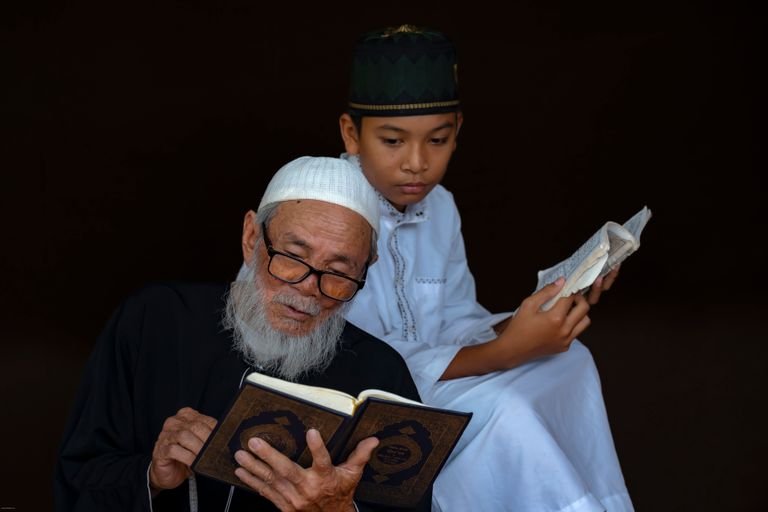
The benefits also flow both ways. Just as the children and elderly participants in Old People’s Home for 4 Year Olds both gained from being brought together, young and old within our communities need one another. Young people need wisdom, experience, stories, mentorship and a sense that they belong to something older and larger than themselves. Older people need the energy of youth, the responsibility of passing something on, and the reminder that their accumulated experience still has enormous value.
The community of Rasulallah ﷺ was not one in which children were hidden away until they became adults. A little boy could joke with the leader of Madinah about his pet bird. A young man struggling with sexual desire could approach him with an incredibly embarrassing problem. Young men who had grown up around him could eventually become people he consulted during one of the most difficult moments of his personal life. That progression – from being known, to being comfortable, to being guided, and eventually to being trusted – is only possible when the generations actually share life together.
Before we can advise our youth, discover their talents, nurture their character or entrust them with the future of this Ummah, we first have to close the gap between us. We have to know them, and they have to know us. Most importantly, they need to grow up knowing that they are not visitors to our homes, our masaajid or our communities, waiting for adulthood before they truly belong.
They are already part of the Ummah.