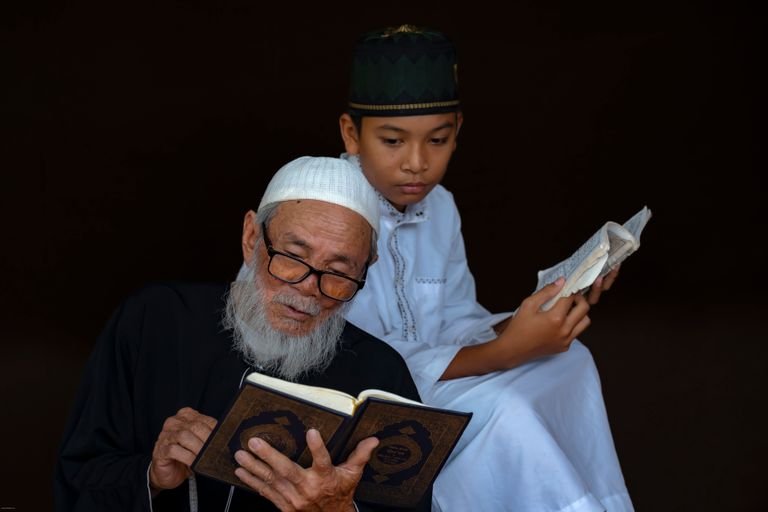
Give Them Something Real to Carry
There is a sentence I think every parents finds themself saying far more often than we’d like to admit: “Don’t worry, I’ll just do it.”
Your child is trying to help you build something, but they’re taking forever. You’re cooking dinner and they want to help, but somehow helping means twice the mess and three times the time. You’re organising something for the community and a young person wants to get involved, but you know you’ll probably have to redo half of what they do anyway.
So eventually, you take over.
And to be fair, it makes perfect sense. I’m faster. I’m more experienced. I know what I’m doing. If the goal is simply to get the job done, it’s usually much easier to do it myself.
But what if getting the job done isn’t actually the only goal? What if I’m also supposed to be building the person standing beside me?
We often complain that young people lack responsibility. They don’t take initiative. They need to be reminded of everything. They struggle to make decisions for themselves. But responsibility isn’t something that suddenly appears when a child turns eighteen. Like every other skill, it has to be developed – and you cannot learn to carry weight if nobody ever gives you anything heavy to carry.
This is something we see repeatedly in the Qur’an and the Seerah. Young people were not simply lectured about responsibility. They were brought into meaningful work, consulted, given a reason to care, and gradually entrusted with things that actually mattered.
Get Their Buy-In
Perhaps the first mistake we make when giving children responsibility is assuming that because we understand why something matters, they automatically understand it too.
As adults, we can see the bigger picture. We know why they need to study, why they should help around the house, why we want them involved in the masjid, why we’re asking them to volunteer at an event, or why we’re pushing them towards something that might initially feel difficult or uncomfortable. But from their perspective, it can simply feel like another instruction being handed down from above.
One of the most remarkable examples of this comes from the relationship between Ibrahim and his son Isma’il عليهما السلام.
Allah tells us that when Isma’il had grown old enough to work alongside his father, Ibrahim عليه السلام received perhaps the most difficult command imaginable. He saw in a dream that he was slaughtering his own son. For a Prophet, this was not simply a disturbing dream to be ignored; it was revelation and a command from Allah.
Yet look at how Ibrahim approaches his son:
يَـٰبُنَىَّ إِنِّىٓ أَرَىٰ فِى ٱلْمَنَامِ أَنِّىٓ أَذْبَحُكَ فَٱنظُرْ مَاذَا تَرَىٰ
“O my dear son! I have seen in a dream that I must sacrifice you. So tell me what you think.”
[As-Saffat, 37:102]
Have we ever paused to think about just how remarkable those last few words are?!
فَٱنظُرْ مَاذَا تَرَىٰ — “So tell me what you think.”
Ibrahim عليه السلام was a Prophet receiving revelation from Allah. The command was not dependent upon Isma’il agreeing to it. Yet he did not simply grab his son, conceal what was happening, and force him into submission. He spoke to him. He explained what Allah had commanded. And then he gave his son the opportunity to process it, think about it, and respond.
And Isma’il’s response shows us the fruit of that tarbiyah:
يَـٰٓأَبَتِ ٱفْعَلْ مَا تُؤْمَرُ ۖ سَتَجِدُنِىٓ إِن شَآءَ ٱللَّهُ مِنَ ٱلصَّـٰبِرِينَ
“O my dear father! Do as you are commanded. Allah willing, you will find me steadfast.”
[As-Saffat, 37:102]
At that moment, the sacrifice was no longer something merely being done to Isma’il. He had understood the command of Allah and consciously submitted himself to it. Ibrahim’s obedience had become Isma’il’s obedience. His father’s mission had become his own.
There is an important lesson here for every parent and murabbi. We can spend years dragging our children through the things that matter to us. Come to the masjid. Attend this class. Help with this event. Study this. Read that. Don’t do this. You need to do that. And perhaps while they are young, our authority is enough to keep them moving in the direction we have chosen.
But eventually, they have to choose that direction themselves.
That means talking to them. Explain why something matters before asking them to carry it. Ask them what they think. Give them space to question, even when the questions are uncomfortable. Help them understand the problem you’re trying to solve and why you believe their contribution matters. When you sense friction, genuinely ask them, “Do you understand why we need to do this?”
Because compliance might get the job done today. Buy-in is what makes them continue the work when you’re no longer standing beside them.
Let Them See the Purpose
Once our children have bought into the broader mission, the responsibilities we give them should have a clear purpose. Young people are far more motivated when they can see that what they are doing actually matters.
We see this beautifully in the example of Zayd bin Thabit رضي الله عنه. Zayd was still young when the Prophet ﷺ recognised his remarkable ability with language and gave him a very specific task. The Messenger ﷺ needed someone trustworthy to read and write his correspondence with the Jews of Madinah, telling Zayd:
إِنِّي وَاللَّهِ مَا آمَنُ يَهُودَ عَلَى كِتَابِي
“By Allah, I do not trust the Jews with my correspondence.”
Zayd wasn’t simply told, “Learning another language would be good for you.” He was shown a genuine problem facing the Muslim community, and then given a role in solving it. The Messenger of Allah ﷺ needed someone he could trust – and Zayd could become that person.
The result was remarkable. Zayd said:
فَمَا مَرَّ بِي نِصْفُ شَهْرٍ حَتَّى تَعَلَّمْتُهُ لَهُ
“Not even half a month had passed before I had learned it for him.”
Zayd knew exactly why he was learning it, what problem it would solve, and how his ability could serve the Deen, and thus learnt an entire language in less than half a month!
We can do the same with our children. Don’t just ask your son to help set up an event; explain that hundreds of people are coming and you’re relying on him to make sure his part is ready. Don’t just ask your daughter to design something; explain the project, who you’re trying to reach, and why her skill could make a difference. Don’t invent meaningless jobs simply to make children feel involved. Where appropriate, give them something that actually matters.
There is a world of difference between “Do this because I’ve asked you to” and “We need this done, and I’m trusting you to do it.”
Zayd wasn’t given busywork. He was shown a need, and then shown how he could fill it.
Genuinely Consult Them
If we want young people to develop judgement, we have to give them opportunities to actually use it.
One of the clearest examples of this comes before the Battle of Uhud. When news reached Madinah that Quraysh was approaching, the Prophet ﷺ consulted the Sahabah about how they should respond. His own inclination was to remain within Madinah and defend the city from inside, while a number of the Sahabah – particularly some of the younger men who had missed the opportunity to fight at Badr – were eager to go out and meet Quraysh in the open.
The important point is that this was not token consultation. The Prophet ﷺ listened to their arguments, discussed the matter with them, and ultimately proceeded with the view of going out to Uhud – the view of the young Sahabah – despite initially preferring another course himself.
There is a big difference between asking a young person, “What do you think?” because we want them to feel included, and genuinely allowing their thinking to influence what happens next. If every suggestion is immediately dismissed because “you’re too young to understand,” we shouldn’t be surprised when they eventually stop offering suggestions altogether.
Consultation is also an opportunity to develop their thinking. Ask them why they hold an opinion. Challenge their assumptions. Play devil’s advocate. Ask what could go wrong, what alternatives they considered, or what they would do if circumstances changed. We don’t have to agree with every idea our children have – often we won’t – but the process itself teaches them how to reason, make decisions and take ownership of their choices.
Involve Them in Your Work
Consulting young people allows them into our thinking. The next step is allowing them into our work.
There is a beautiful image Allah gives us of Ibrahim and Isma’il عليهما السلام:
وَإِذْ يَرْفَعُ إِبْرَٰهِـۧمُ ٱلْقَوَاعِدَ مِنَ ٱلْبَيْتِ وَإِسْمَـٰعِيلُ رَبَّنَا تَقَبَّلْ مِنَّآ ۖ إِنَّكَ أَنتَ ٱلسَّمِيعُ ٱلْعَلِيمُ
“And remember when Ibrahim raised the foundations of the House, together with Isma’il, saying, ‘Our Lord! Accept this from us. You are indeed the All-Hearing, All-Knowing.'”
[Al-Baqarah, 2:127]
Ibrahim عليه السلام wasn’t simply teaching his son about serving Allah. Father and son were serving Allah together. Isma’il was beside his father, helping him build the Ka’bah with his own hands, while they made du’a together that Allah would accept their work.
We see something similar with Anas ibn Malik رضي الله عنه. He was brought to the Prophet ﷺ as a young boy and spent years serving him, at home and while travelling. He wasn’t separated from the serious work of the adults until he reached some arbitrary age at which he was suddenly considered ready. He accompanied the Messenger ﷺ, watched him work, helped him and was gradually entrusted with tasks of his own. On one occasion, the Prophet ﷺ even sent the young Anas on a confidential errand, which Anas faithfully kept secret – even from his own mother!
There is something powerful about simply bringing our children with us. If you’re helping organise an event, take them along. If you’re visiting someone who is sick, bring them. If you’re preparing a lesson, let them sit beside you. If you’re working on a community project, find something genuine they can help with. Yes, sometimes they’ll slow us down. Sometimes it genuinely would be easier to leave them at home and do everything ourselves.
But remember the question we started this article with: is getting the job done the only goal, or are we also building the person beside us?
And when we do this, we have to be ready for some pushback – because unfortunately, some people will question why children are present in adult spaces. Umar رضي الله عنه would bring the young Ibn Abbas رضي الله عنهما into gatherings with the senior veterans of Badr, and even he was questioned why a young man was being included amongst them when they had sons his age. Umar eventually demonstrated why: he asked the gathering about the meaning of Surat an-Nasr, and Ibn Abbas offered the deeper interpretation that it signalled the approaching death of the Prophet ﷺ. Umar replied that he understood the Surah in exactly the same way.
Our children cannot learn how we serve Allah if they never actually see us serving Him. And eventually, watching should turn into helping.
Build Them Up
Of course, we don’t go from giving a child their first small task to handing them enormous responsibility overnight. Trust can be developed gradually. Give them something manageable, watch how they carry it, guide them, then give them something heavier.
Usaamah bin Zayd رضي الله عنه is a remarkable example of what that development can eventually produce. While still very young, he was already being sent on military expeditions by the Prophet ﷺ and entrusted with leadership. He participated in the expedition to al-Huraqat of Juhaynah, and other narrations record him commanding expeditions during the lifetime of the Messenger ﷺ.
Then, towards the very end of the Prophet’s ﷺ life, came an extraordinary appointment. The Messenger ﷺ placed Usamah in command of an army being prepared to march north towards the Romans. This was no youth expedition. Among those serving in the army were senior Sahabah, men considerably older and more experienced than Usamah.
Some people questioned the appointment precisely because of his youth. The Prophet ﷺ responded by publicly defending him:
إِنْ تَطْعَنُوا فِي إِمَارَتِهِ فَقَدْ كُنْتُمْ تَطْعَنُونَ فِي إِمَارَةِ أَبِيهِ مِنْ قَبْلُ، وَايْمُ اللَّهِ إِنْ كَانَ لَخَلِيقًا لِلْإِمَارَةِ، وَإِنْ كَانَ لَمِنْ أَحَبِّ النَّاسِ إِلَيَّ، وَإِنَّ هَذَا لَمِنْ أَحَبِّ النَّاسِ إِلَيَّ بَعْدَهُ
“If you criticise his leadership, you had previously criticised the leadership of his father. By Allah, he was indeed worthy of leadership and was among the dearest of people to me, and this one is among the dearest of people to me after him.”
Usamah did not suddenly become capable the day he was given command of that army. He had spent years around the Messenger ﷺ. He had participated in expeditions, carried responsibility, made decisions, made mistakes, been corrected and continued to grow. By the time an enormous responsibility was placed upon his shoulders, those shoulders had already been strengthened by carrying smaller ones.
That is the progression we should aim for with our own children. First, come with me. Then, help me do it. Then, you take care of this part. Eventually, I’m trusting you with this – come back to me if you need help.
We sometimes protect young people from responsibility because we think they aren’t ready. But if we continually wait until they’re ready before giving them anything meaningful to carry, we may find that they never become ready at all.
Give Them Space to Grow
Of course, giving young people genuine responsibility also means accepting that they will not always get it right. They will make poor decisions, forget things, misunderstand instructions and occasionally disappoint us. If we respond to every mistake by taking over – “Forget it, I’ll do it myself” – we return to exactly where we started.
Growth requires space. Our role is not to prevent every mistake, but to guide, correct and help them learn from those mistakes without crushing the confidence and initiative we are trying to build. The Prophet ﷺ entrusted young people with real responsibility, but he also knew how to respond when they stumbled.
And that brings us to perhaps the most difficult part of purposeful tarbiyah: how do we correct the behaviour without defining the child by their mistakes? That’s where we’ll turn in the next blog.